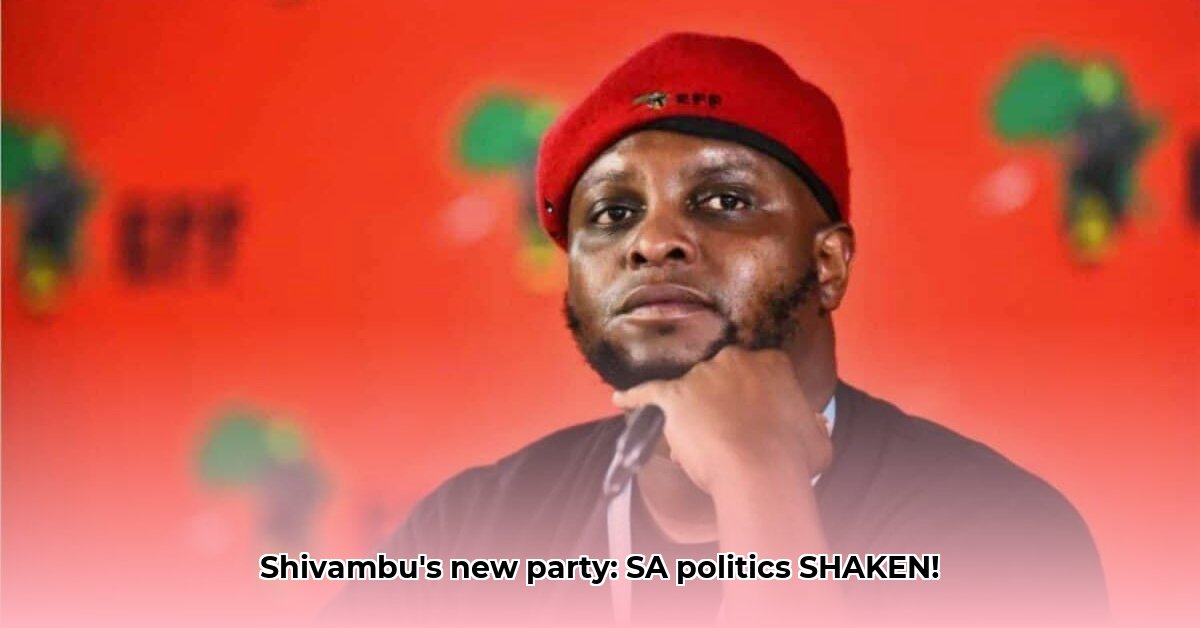
Floyd Shivambu's Departure: A Political Earthquake?
The recent departure of Floyd Shivambu from the uMkhonto weSizwe (MK) party has sent shockwaves through South African politics. His dismissal as Secretary-General, followed by his announcement of plans to form a new party, has sparked intense speculation and debate. But what truly lies behind this dramatic turn of events? Both Shivambu and the MK party offer starkly contrasting narratives.
The MK party cites Shivambu's unauthorised trip to Malawi to visit Shepherd Bushiri as a breach of party protocol. However, Shivambu alleges a conspiracy, claiming the official explanation is a fabricated attempt to discredit him, possibly linking him to a plot against former President Jacob Zuma. This conflicting information highlights deep divisions within the MK party and raises questions about the true motivations behind his removal. Will this lead to a further fracturing of the already fragmented South African political landscape? That question remains central to understanding the current situation.
A New Political Force Emerges?
The question on many South Africans’ minds is whether Shivambu will successfully launch a new political party. He's certainly hinted at such intentions, fuelling widespread speculation. But establishing a successful political party from scratch is a monumental undertaking. It requires substantial funding, broad-based support across diverse communities, and a compelling message that resonates with voters. It even necessitates overcoming the negative publicity surrounding his departure from the MK party.
The success or failure of such a venture hinges on many interrelated factors, not the least of which is the current political climate. Will this new party successfully challenge the established order? Only time will tell.
The Broader Implications for South African Politics
This dramatic split has significant implications for the South African political landscape. The MK party is clearly experiencing internal turmoil, facing serious questions about its leadership and stability. Other opposition parties are closely observing this situation, assessing the potential opportunities and threats presented by Shivambu’s actions. Will this upheaval lead to a realignment of political forces? Could we see shifts in voter allegiances? The consequences remain to be seen, but the current uncertainty serves as a catalyst for change.
Navigating the Risks: Challenges for Shivambu's New Party
Shivambu’s venture is a high-stakes gamble with considerable obstacles. His success depends heavily on overcoming several key challenges:
| Risk Factor | Likelihood | Impact | Mitigation Strategies |
|---|---|---|---|
| Securing Sufficient Funding | Moderately Likely | Very High | Aggressive fundraising, strategic partnerships, exploring crowdfunding. |
| Gathering Broad-Based Support | Very Likely | High | Targeted community outreach, focusing on key demographics, crafting a broadly appealing platform. |
| Managing Internal Conflicts | Moderately Likely | Very High | Clear leadership structure, fostering open communication, proactive conflict resolution. |
| Dealing with Negative Publicity | Likely | Medium | Proactive public engagement, directly addressing concerns, strategic communication. |
| Facing Potential Legal Issues | Unlikely | Very High | Top-tier legal counsel, ensuring transparency in all financial dealings. |
The Road Ahead: What to Expect
The near future remains uncertain. News surrounding Floyd Shivambu will undoubtedly continue to dominate headlines. He's currently engaged in consultations with various individuals and groups, and the coming months promise significant shifts in the political landscape. The longer-term consequences are difficult to predict, but South African politics has undoubtedly been injected with a potent dose of dramatic unpredictability.
How will Floyd Shivambu's new party impact South African elections?
Three Pivotal Points:
- Shivambu's new party could significantly reshape South African politics, especially ahead of the 2026 elections.
- It has the potential to split the left-wing vote, thereby affecting strategies of established parties like the ANC and EFF.
- Success depends heavily on his ability to secure adequate funding and build broad-based support while successfully navigating potential challenges.
A New Player Enters the Fray
Shivambu's new party could prove to be a game-changer. Its potential impact on the 2026 elections remains uncertain, but its emergence undeniably shakes up the political landscape. How might such a shift alter the electoral playing field?
The Shivambu Factor: A Divided Left?
Shivambu's departure poses a significant question: Will he attract support from the existing left-wing parties (ANC and EFF), or will he create a potent new force? His ability to garner votes from these parties could be critical to his success. Will this lead to a less unified left-wing bloc? What will be the impact of this potential shift?
Navigating the Hurdles
Building a successful new party is no easy feat. The competition is fierce, and past attempts have often faltered. Securing sufficient funding, constructing a solid base of support, and effectively conveying a meaningful message are all essential for survival. However, it also provides an opportunity to capitalise on voter dissatisfaction with the existing political parties.
The Unfolding Story
Predicting the election's impact is challenging. Various factors could influence the outcome, including economic conditions, other parties' responses, and the broader political climate. Shivambu's new party could emerge as a significant force, or it might fade into political obscurity. Only time will reveal the final chapter. The 2026 elections are shaping up to be an exciting spectacle, and Shivambu's new party is set to play a crucial role in defining its outcome.